
One Saturday concert, six cameras and a calm gallery
Hannah tells the story of Marcus, who ran a one-night concert on six cameras, and how careful planning of the vision mixing kept the gallery quiet.
· · 6 min read
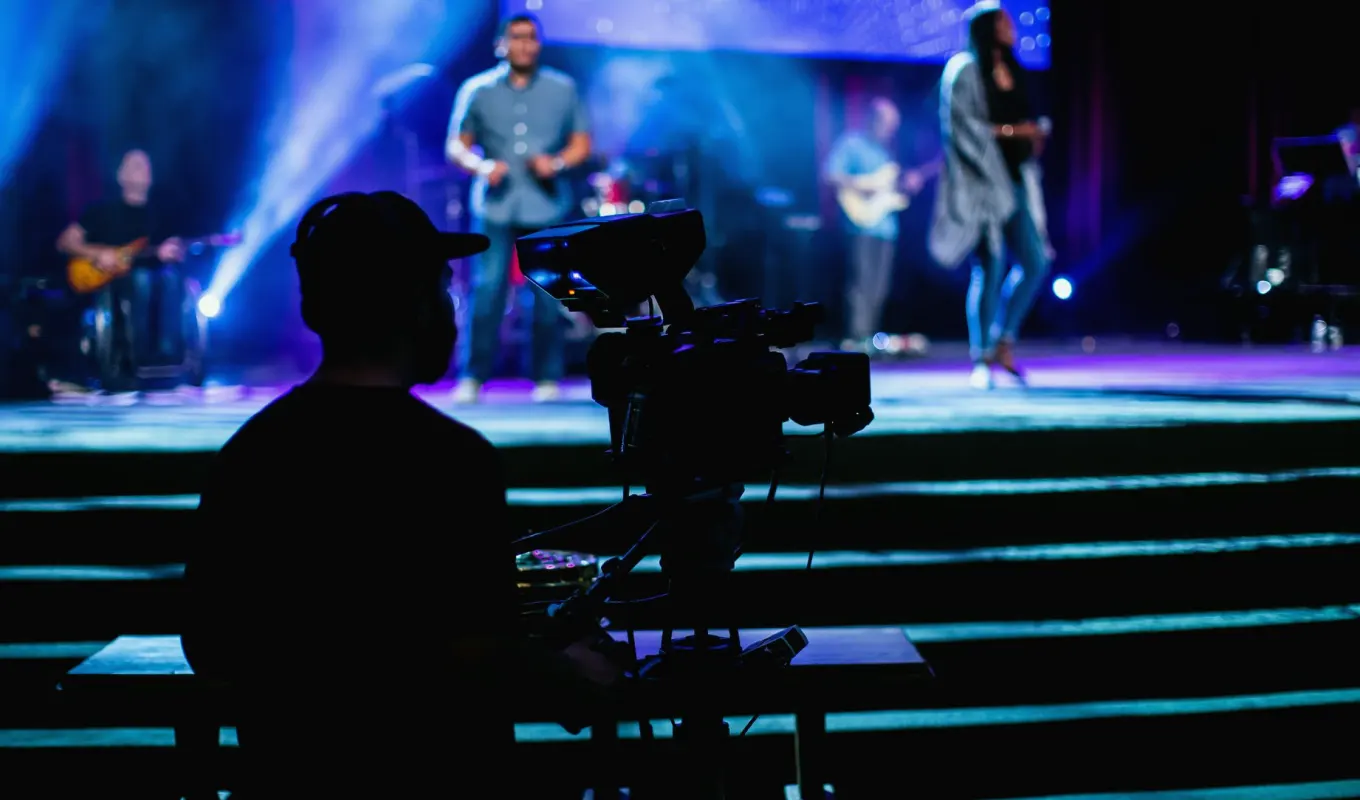
A call in early autumn
Marcus rang us on a grey morning in mid autumn. He runs a small arts venue and had a single concert booked, a choir with a string ensemble, to be filmed for a local broadcast and a streamed audience. He had six cameras promised from a hire company and no idea who would cut between them. His worry was simple: he had watched a previous live recording where the picture lingered on the wrong face for half a verse.
I took the call as production manager, and my first questions were about the room rather than the kit. How many people would be in the hall, where could a desk sit, and who would call the shots? Marcus had expected a quote for a vision mixer and little else. By the end of the conversation he understood that the cutting is only the visible part of the job.
We agreed that Priya, our lead vision mixer, would join the first planning call. A written quotation followed within the week, listing the crew, the source count and the hours on site, so Marcus could see exactly what he was agreeing to.
Planning the shots before anyone arrives
Multi-camera vision mixing starts on paper. Priya asked Marcus for the running order, a recording of the choir if one existed, and the score for the two longest pieces. From that she drafted a shot plan: which camera carries the conductor, which holds the wide, which roams for the strings, and which stays locked on the soloists.
Six cameras sounds generous, but each one needs a job. Two went on fixed wides from the balcony, one on a tight shot of the conductor, one on the string section, one on the front row of singers, and one handheld for movement between pieces. Naming them this way gave the camera operators something to aim at and gave Priya a clear picture of what she could call.
Marcus found the plan oddly reassuring. He told me it was the first time anyone had described his own concert back to him in shots, and it let him spot two moments he wanted to protect, including a quiet solo near the end.
- Running order and score shared a week ahead
- One clear job for each camera
- Two moments the client wants protected, marked on the plan
The rehearsal that saved the evening
We were in the hall by mid afternoon for a short rehearsal, with the desk set at the back of the stalls and talkback checked on every camera. Priya cut through the sound check as if it were the performance, and that is when a problem showed itself. The conductor stood in front of a bright window, and the camera pointed at him washed out as the light changed.
Because we had time, we moved the camera a few metres, closed a blind and agreed a fallback on the second wide. Had we found this at the downbeat, Priya would have been cutting around a hole in the picture for the entire first piece.
The choir also told us something we could not have guessed from the score: they would stand for the finale. We added a camera note, raised the handheld to a higher position and rehearsed the cut. Nobody in the audience would ever see any of this, which is rather the point of rehearsing.
What the cutting looked like on the night
Once the doors opened, the gallery went quiet in the way we like. Priya called her cuts a beat ahead, the camera operators answered with a word each, and the technical director kept the clock against the transmission window. Marcus sat beside us for the first piece, watching the programme monitor rather than the hall.
The best vision mixing is hard to notice. She cut on phrase endings, held the conductor through the long crescendos, and gave the strings their moment when the melody moved to them. When the soloist began the quiet passage Marcus had asked us to protect, she stayed on one steady shot for nearly a minute and did not flinch.
There was one wobble, a late entry that left the wrong camera live for two seconds. Priya moved on without comment and the next cut covered it. A calm desk recovers quickly because nobody in the room is shouting.
- Cuts called a beat ahead of the music
- Long holds during quiet solos
- A small slip absorbed without fuss
What Marcus took away
Afterwards Marcus said the part he valued most was the shot plan, because it gave him a vocabulary. He could now watch any live recording and tell why a cut worked or did not. He also noticed how little he had needed to do on the night, which had been his hope from the first call.
He asked about running a second concert in spring and whether his own volunteers could learn to operate a simple switcher for smaller events. That is a different job, covered by our rehearsal and operator training, and I suggested he treat the two as separate quotations rather than bundle them.
I like cases like this because nothing about it was dramatic. A venue with a modest budget, one evening, six cameras and a plan. The result was a recording the choir was happy to share, and a client who understood what he had paid for.
What to ask before booking a vision mixer
If you are planning a similar event, a few questions will tell you more than any kit list. Ask who will actually cut the show and whether they have seen the programme before. Ask how many cameras the plan assumes and what each one is for, and whether there is time to rehearse on site before the audience arrives.
It also helps to know what is included in the price. A vision mixer on its own is different from a mixer with a technical director, talkback and a monitored desk. We write all of this into the quotation, so you can compare it like for like with anyone else.
Finally, share your running order early. Priya says she can do more with a messy running order a week ahead than a perfect one an hour before doors. Tell us about the awkward moments too, the standing finale or the speech that always overruns.
- Who cuts the show, and have they seen the programme?
- What is each camera for?
- Is rehearsal time on site included?
Marcus's concert was an ordinary job done carefully: a shot plan, a rehearsal, a quiet gallery and a steady hand on the switcher. That is what multi-camera vision mixing looks like when it works. If you have a show coming up, send us the running order through the contact page and we will reply with a written quotation.